BLACK GOLD Tamil Movie Review
Cast -:
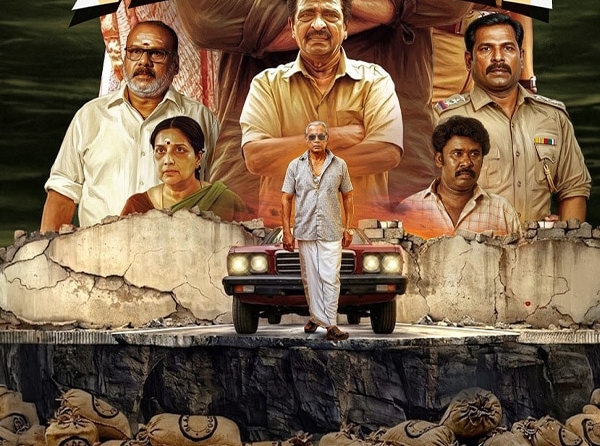
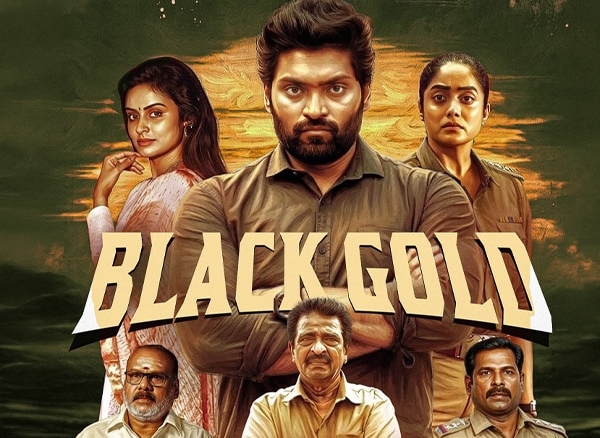
Vetri, Priyalaya, Livingston, Abirami Venkatachalam, A. Venkatesh, Ramar, Aroul D Shankar, Sabita Roi, Nizhal gal Ravi, and others.
Crew-:
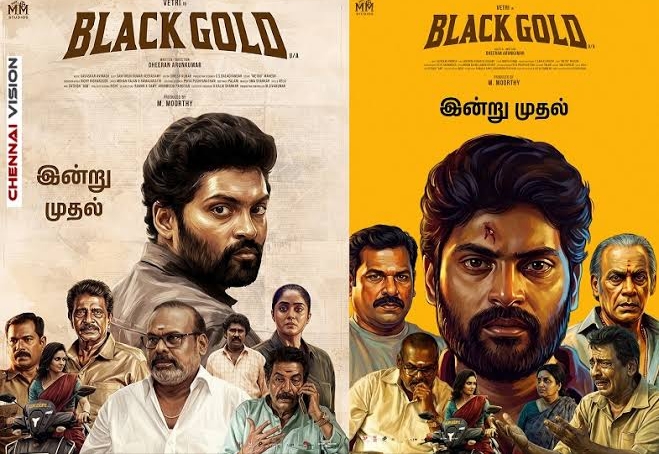
Music By: Gavaskar Avinash , Rhythm Arrangement: Pyare Lal & Gavaskar Avinash , Recording Engineer: Vyshak PK and Sathya , Recording Studio: Contrabass Music Studio and Uno Records, Mixed & Mastered by Thiru B at Greenvalley Studios, All songs have been programmed and arranged by Gavaskar Avinash., Produced by: MM Studios , Producer: M. Moorthy Co-Producer: M. Maanashwani, Executive Producer: V. Kalai Shankar Written & Directed by: Dheeran Arunkumar , DOP: Santhosh Kumar Veerasamy , Editor: Dinesh Kumar , Production Designer: C.S. Balachandar , Stunt Director: “Metro” Mahesh , Choreography: Richy Richardson , Costume Designer: Priya Purushoth, Costumer: Palani , Makeup Artist: Uma Shanker , Stills: Velu , PRO: “AIM” Sathish , Publicity Designer: Twenty.one.G Audiography: Ghatam Siva , VFX & DI: Pixel Lights Studio , Digital Promotion: “Meesaya Muruku” Ranjith , Production Controller: M. Siva Kumar , Co-Director: Raman K Samy , Direction Team: Arunmozhi Pandiyan, Durai Annamalai, Thendral Kumanan, Nagaraj, Gopalakrishnan, Ilamaran, Vinoth Kumar, Sandhosh kumar , Audio Label: Lahari Music and Others.
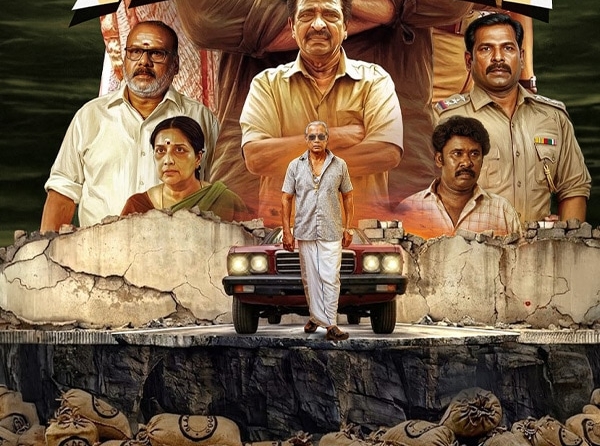
Story -:
Two underworld bosses (Venkatesh and Arul Shankar) are bitter rivals, clashing over smuggling, illicit goods, and the forced acquisition of properties at throwaway prices.
A police officer (played by producer Moorthy) exploits this rivalry to extract money from both sides.
Livingston, a driver working for one of the bosses (Venkatesh), lives with his wife (Sudha), son (Vetri), and daughter.
The son, who works at a car service center, falls in love with a young woman named Priya Laya. However, Priya’s father (Jeeva Ravi) strongly disapproves of the relationship.
When the police inspector assaults and humiliates the son’s father, the son retaliates by attacking the inspector while keeping his own face concealed.
Meanwhile, a gang (led by Karate Venkatesan and others) enters the town posing as vegetable vendors. They use this guise to scout for homes—specifically those occupied only by women or the elderly—before breaking in, committing brutal assaults, and carrying out robberies.
The boss for whom the protagonist’s father works discovers the immense profitability of the human hair trade. He enters the business, and his rival boss soon follows suit.
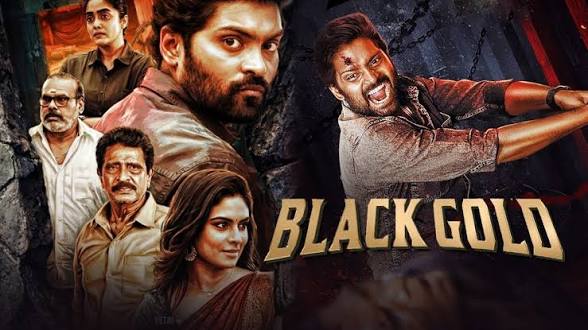
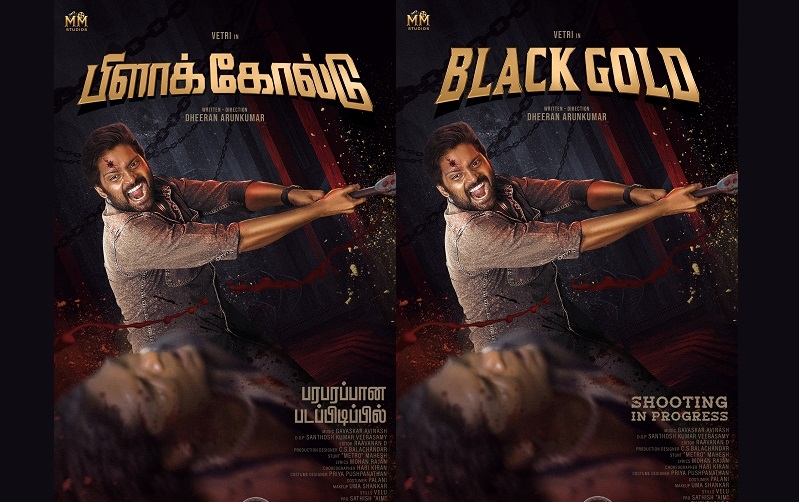
The aforementioned gang of robbers begins intercepting the vehicles transporting the hair shipments—belonging to the rival bosses—and stealing the cargo, which they then sell for profit.
In the midst of this, the protagonist’s father goes missing along with his truck while transporting a multi-crore shipment of human hair for his employer.
The boss confronts the protagonist, accusing his father of stealing the shipment.
Knowing his father’s inherent honesty, the son sets out to find him. What happened to the father? And what the protagonist did next—that is what the film is about.
Watch The Video -:
Movie Review -:
In our country, the practice of offering one’s hair to the deity has existed for ages. Initially, this hair was simply discarded as waste and burned. However, as the poor quality of synthetic wigs and hairpieces became glaringly apparent, the natural hair offered at temples gained significant global demand.
The long, high-quality hair of Indian women—maintained using natural products like *shikakai*—has become highly sought after. Furthermore, human hair is even used in the production of certain food items, such as chocolate and bread.
Driven by these factors, multinational corporations began vying for access to the hair collected at Indian temples, prompting the temples to raise their prices.
The intense competition and rivalry among companies and agents to secure this hair have escalated into serious crimes, including smuggling, physical assaults, and even murder.
Once processed and refined for quality, this Indian hair can fetch a price of up to one lakh rupees per kilogram. “Just as gold chains are snatched from women’s necks, perhaps a new, anti-social crime could emerge—where women’s hair is cut off and stolen…”
— This striking, sensational, and largely unexplored concept in cinema serves as the foundation for this film.
Credit where it’s due: while it might seem like an extreme stretch of the imagination, it’s a compelling premise. Kudos to director Dheeran Arun Kumar.
Music director Gavaskar Avinash significantly bolsters the film with his fantastic background score—well done!
Santhosh Kumar Veerasamy’s cinematography is excellent.
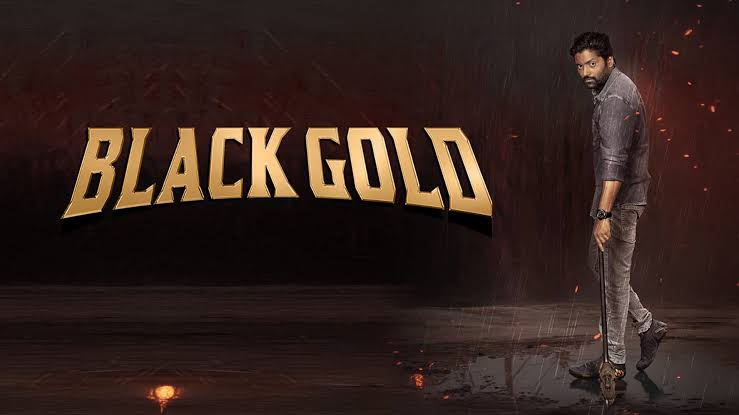
Stunt director Metro Mahesh impresses, particularly with the *surul vaal* (flexible sword) fight sequence.
Vetri delivers a performance consistent with his usual style.
Priya Laya brings a graceful charm to the screen.
Livingston stands out as an honest, hardworking, and simple father figure.
Producer Moorthy fits the role of the police officer well.
Karate Venkatesan is genuinely menacing—his very appearance makes him perfect for the role of a cold-blooded killer who scouts targets while posing as a vegetable vendor.
Arul Shankar handles the *surul vaal* sequences with great finesse.
Unfortunately, Venkatesh’s performance feels quite artificial. At one point, instead of using the correct term, he says “thurathipathigal”—shouldn’t someone have caught that?
From the very opening, the staging of the scenes and the dialogue feel forced and unnatural.
The screenplay also lacks polish. For instance, after it is established that Arul Shankar’s character has died, the film shows a flashback where he engages in a heroic, high-octane fight—how does that work? What is the point of showing it? The character is already dead, isn’t he? Besides, why does that character even need a fight sequence? Did the actor, Vetri, say he couldn’t perform with a *surulvaal* (coiled sword)?
Moreover, it’s a despicable character—why have a sad song for his death?
In general, there is no proper connection or cohesion between the scenes. Gangster fights, a romance, a vegetable heist—everything feels disjointed. As a result, Dinesh Kumar’s editing goes to waste.
The filmmakers had a great premise—a “hair mafia”—but failed to craft a proper screenplay around it. At some point, the whole “hair” theme gets pushed to the sidelines, while the film is taken over by the usual tropes: fights, sentimentality, and vendettas.
Writing a solid screenplay is no child’s play, sir.
If someone promised to take you to Ooty, but instead made you sit in an air-conditioned room at home and said, “See, Ooty is just as chilly—enjoy, enjoy!”—you wouldn’t get angry, would you? You wouldn’t, right? If that’s the case, then by all means, watch *Black Gold*.in short: *Black Gold*… is *Blocked Gold*.
In our country, the practice of offering one’s hair to the deity has existed for ages. Initially, this hair was simply discarded as waste and burned. However, as the poor quality of synthetic wigs and hairpieces became glaringly apparent, the natural hair offered at temples gained significant global demand.
The long, high-quality hair of Indian women—maintained using natural products like *shikakai*—has become highly sought after. Furthermore, human hair is even used in the production of certain food items, such as chocolate and bread.
Driven by these factors, multinational corporations began vying for access to the hair collected at Indian temples, prompting the temples to raise their prices.
The intense competition and rivalry among companies and agents to secure this hair have escalated into serious crimes, including smuggling, physical assaults, and even murder.
Once processed and refined for quality, this Indian hair can fetch a price of up to one lakh rupees per kilogram. “Just as gold chains are snatched from women’s necks, perhaps a new, anti-social crime could emerge—where women’s hair is cut off and stolen…”
— This striking, sensational, and largely unexplored concept in cinema serves as the foundation for this film.
Credit where it’s due: while it might seem like an extreme stretch of the imagination, it’s a compelling premise. Kudos to director Dheeran Arun Kumar.
Music director Gavaskar Avinash significantly bolsters the film with his fantastic background score—well done!
Santhosh Kumar Veerasamy’s cinematography is excellent.
Stunt director Metro Mahesh impresses, particularly with the *surul vaal* (flexible sword) fight sequence.
Vetri delivers a performance consistent with his usual style.
Priya Laya brings a graceful charm to the screen.
Livingston stands out as an honest, hardworking, and simple father figure.
Producer Moorthy fits the role of the police officer well.
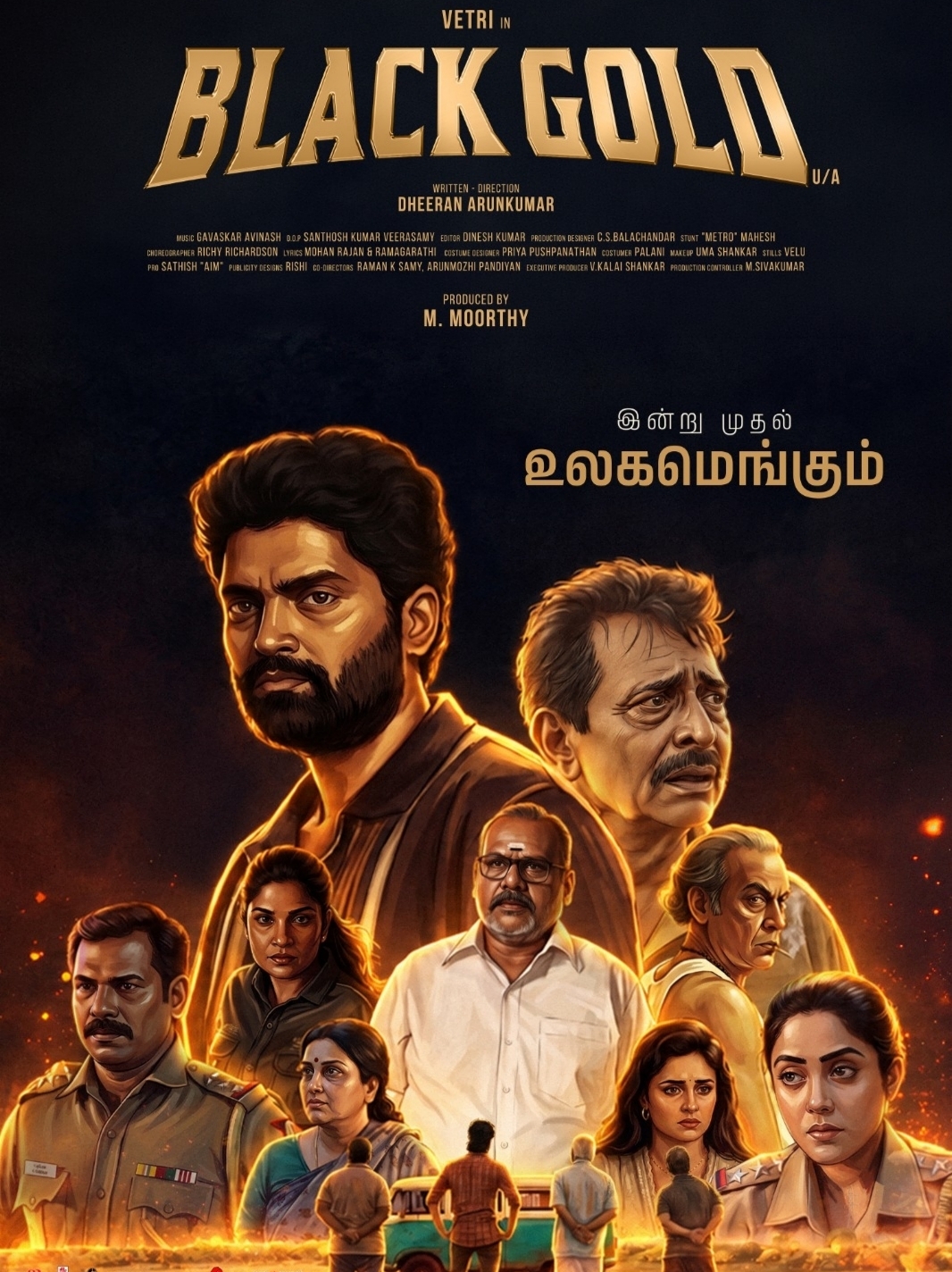
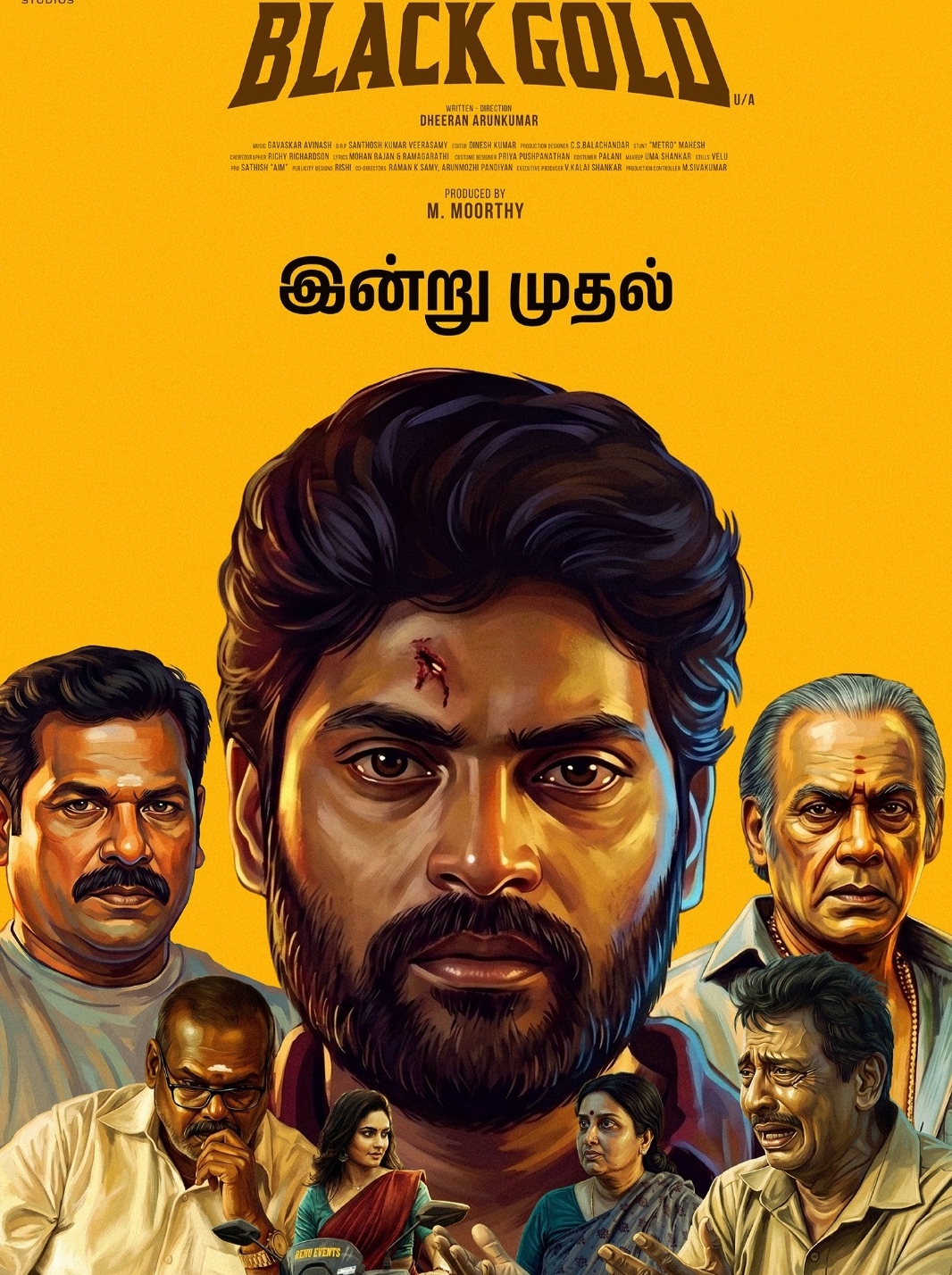
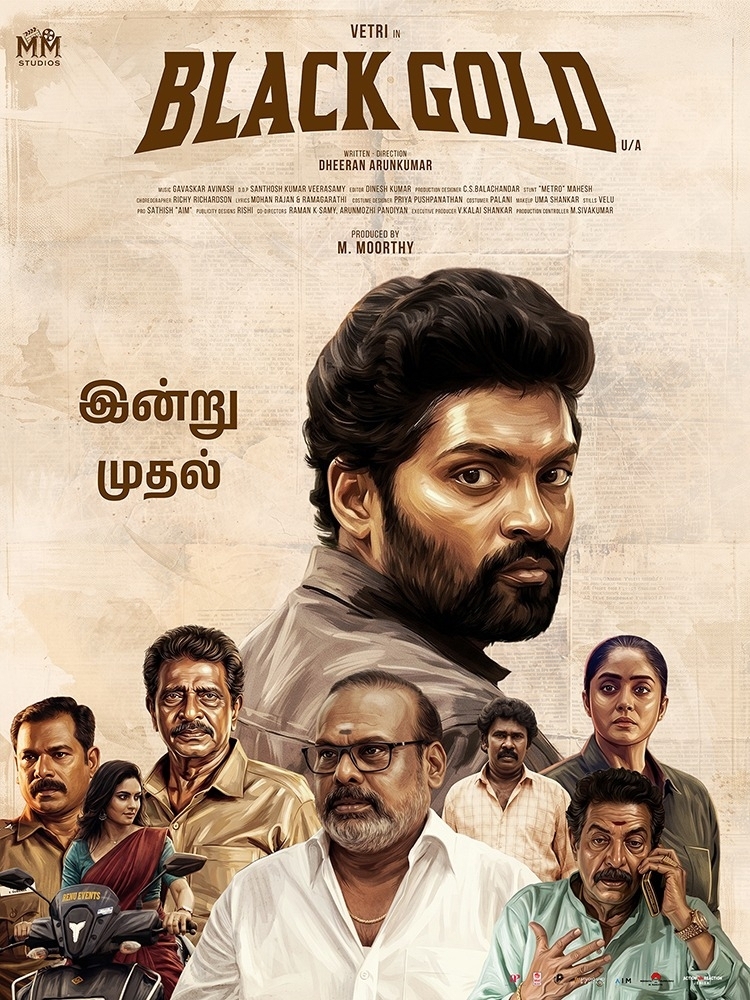
Karate Venkatesan is genuinely menacing—his very appearance makes him perfect for the role of a cold-blooded killer who scouts targets while posing as a vegetable vendor.
Arul Shankar handles the *surul vaal* sequences with great finesse.
Unfortunately, Venkatesh’s performance feels quite artificial. At one point, instead of using the correct term, he says “thurathipathigal”—shouldn’t someone have caught that?
From the very opening, the staging of the scenes and the dialogue feel forced and unnatural.
The screenplay also lacks polish. For instance, after it is established that Arul Shankar’s character has died, the film shows a flashback where he engages in a heroic, high-octane fight—how does that work? What is the point of showing it? The character is already dead, isn’t he? Besides, why does that character even need a fight sequence? Did the actor, Vetri, say he couldn’t perform with a *surulvaal* (coiled sword)?
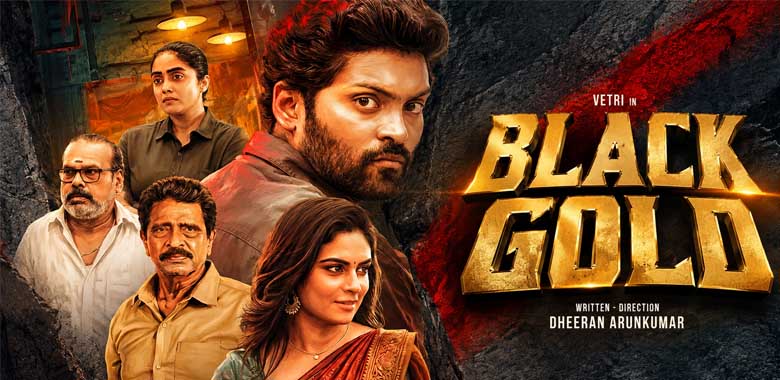
Moreover, it’s a despicable character—why have a sad song for his death?
In general, there is no proper connection or cohesion between the scenes. Gangster fights, a romance, a vegetable heist—everything feels disjointed. As a result, Dinesh Kumar’s editing goes to waste.
The filmmakers had a great premise—a “hair mafia”—but failed to craft a proper screenplay around it. At some point, the whole “hair” theme gets pushed to the sidelines, while the film is taken over by the usual tropes: fights, sentimentality, and vendettas.
Writing a solid screenplay is no child’s play, sir.
If someone promised to take you to Ooty, but instead made you sit in an air-conditioned room at home and said, “See, Ooty is just as chilly—enjoy, enjoy!”—you wouldn’t get angry, would you? You wouldn’t, right?
If that’s the case, then by all means, watch *Black Gold*.
In short: *Black Gold*… is *Blocked Gold*.
This Is My Personal Review So Please Go and Watch The Movie in Theatres Only.
Written by CNN Online Media Admin Ratting CNN Online Media Admin 4 / 5